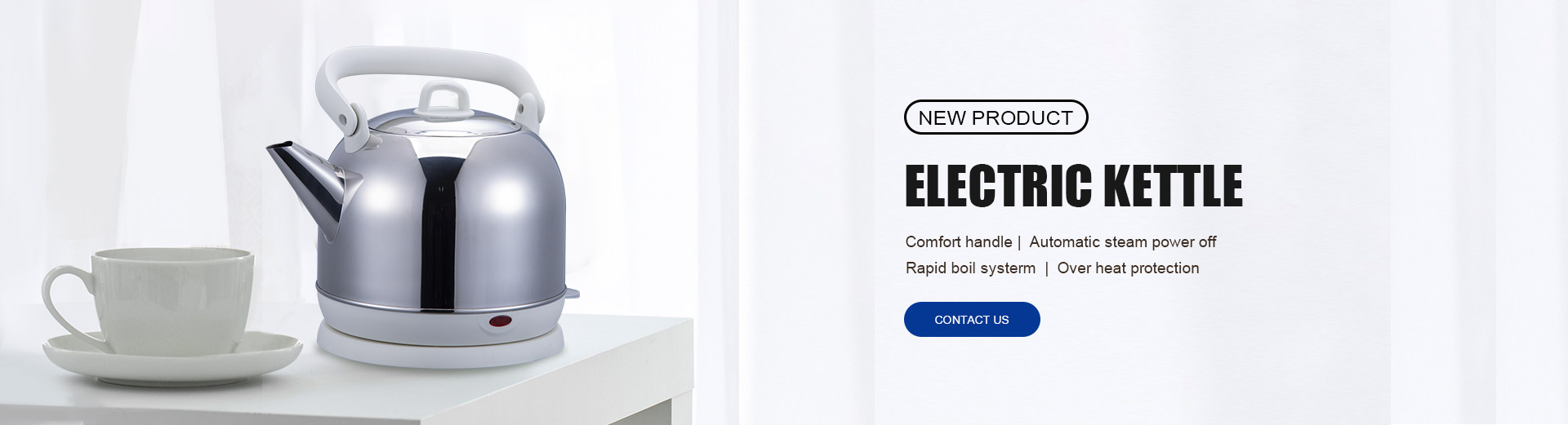
Stainless steel inner pot kettles generally provide stronger durability and heat resistance, while plastic inner pot kettles offer lightweight advantages and cost efficiency. Safety depends on material quality, design, and manufacturing control.
The inner pot is the main component that directly contacts water and heat, making material selection important for product safety.
The inner pot material affects:
Heat resistance
Durability
Water contact performance
Product lifespan
User confidence
For electric kettle manufacturers, selecting between stainless steel and plastic inner pots requires evaluating:
Target market requirements
Safety expectations
Product positioning
Manufacturing standards
Both materials can be used safely when properly designed and produced.
The main difference is the material characteristics and heat performance.
Stainless steel inner pots are widely used because of:
Strong durability
High temperature resistance
Stable structure
Long service life
They are commonly selected for:
Premium household kettles
Commercial products
High-quality appliance lines
Plastic inner pot designs focus on:
Lightweight construction
Flexible design options
Lower production cost
They are commonly used for:
Entry-level products
Cost-sensitive markets
Lightweight appliance designs
Heat resistance is an important safety factor for electric kettles.
Stainless steel provides:
Strong resistance to high temperatures
Stable performance during repeated heating
Better structural strength
This makes it suitable for products requiring frequent use.
Heat-resistant plastics are designed specifically for appliance applications.
Quality plastic materials can provide:
Good thermal stability
Lightweight handling
Design flexibility
Manufacturers must carefully select suitable plastic grades to ensure safety.
Durability affects both safety and product lifespan.
Stainless steel inner pots offer:
Strong impact resistance
Better wear resistance
Stable performance over time
They are suitable for users who expect long-term product reliability.
Plastic inner pots provide reliable performance when using:
Suitable materials
Proper temperature control
Professional manufacturing processes
However, material selection and quality control are important factors affecting lifespan.
Water contact safety depends on material quality and production standards.
Stainless steel is widely preferred because it provides:
Stable water contact performance
Easy cleaning characteristics
Strong material reliability
Plastic inner pots require attention to:
Material certification
Heat resistance
Manufacturing quality
Food-contact-grade materials and strict production control help ensure safe usage.
Different materials support different market strategies.
Often used for:
Premium appliances
Durable product lines
Quality-focused markets
It creates value through:
Material perception
Performance reliability
Premium appearance
Often used for:
Affordable products
Lightweight designs
Large-volume markets
It creates value through:
Cost efficiency
Flexible designs
Practical performance
Different inner pot materials require different production methods.
| Factor | Stainless Steel Inner Pot | Plastic Inner Pot |
|---|---|---|
| Material Feature | Strong and heat resistant | Lightweight and flexible |
| Processing Method | Metal forming and finishing | Injection molding |
| Durability | Higher | Depends on material quality |
| Cost | Usually higher | Usually lower |
| Market Position | Premium and durable | Practical and cost-effective |
Manufacturers must adjust production processes according to material characteristics.
OEM projects require balancing safety, cost, and market expectations.
Suitable for:
Premium brands
Higher-value products
Durability-focused markets
Customization options include:
Stainless steel grade
Surface finishing
Structural design
Suitable for:
Cost-effective products
Lightweight appliance categories
High-volume production
Customization options include:
Plastic color
Product shape
Housing design
Professional manufacturing requires strict quality management.
Manufacturers check:
Material specifications
Supplier quality
Consistency
Monitoring includes:
Forming accuracy
Assembly quality
Component matching
Testing may include:
Heating performance
Electrical safety
Product durability
Quality control ensures the selected material performs reliably.
User maintenance also influences product experience.
Advantages include:
Easy cleaning
Strong surface durability
Good long-term appearance
Advantages include:
Lightweight handling
Flexible product designs
Easy daily operation
Both materials require proper product design to improve user experience.
Premium products usually focus on:
Safety
Material quality
User trust
Long-term performance
Stainless steel inner pots often support premium positioning because of their durability and material advantages.
However, high-quality plastic inner pot designs can also provide safe and practical solutions when developed with appropriate materials and manufacturing controls.
The right choice depends on:
Product positioning
Target customers
Price range
Safety requirements
Usage environment
Choose stainless steel inner pots when:
Durability is a priority
Premium positioning is required
Long-term performance is important
Choose plastic inner pots when:
Lightweight design is needed
Cost efficiency is important
Practical applications are the focus
Stainless steel and plastic inner pot kettles can both meet safety requirements when properly designed and manufactured.
Stainless steel inner pots provide stronger durability and heat resistance, while plastic inner pots offer lightweight and cost-effective solutions.
By selecting suitable materials and working with an experienced electric kettle manufacturer, brands can create products that balance safety, performance, and market requirements.