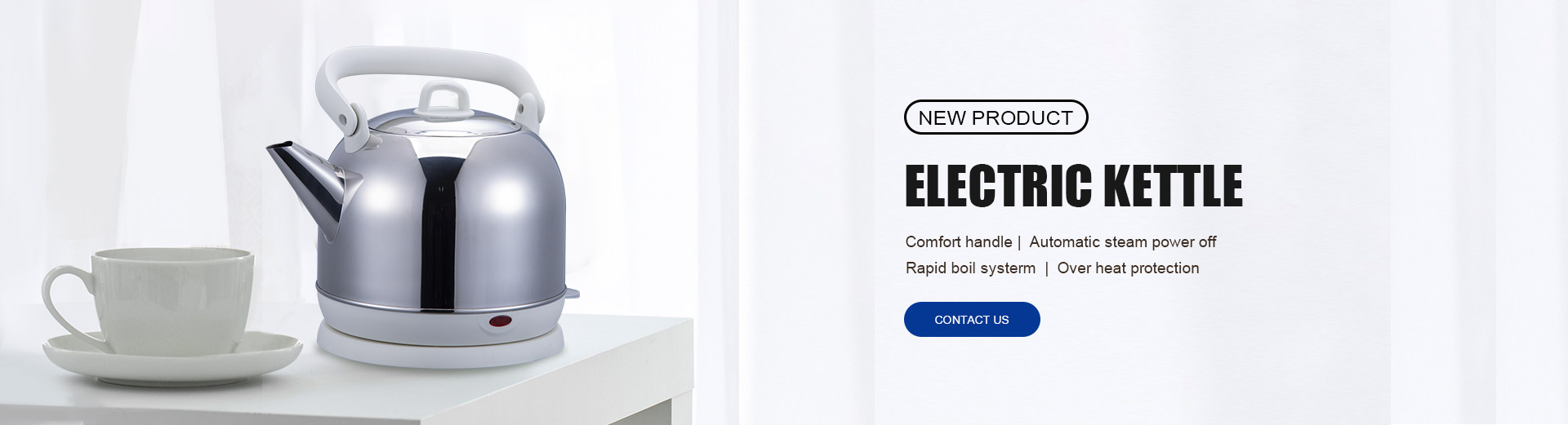
Compact electric kettles are suitable for space-saving and individual-use markets, while large electric kettles fit high-volume and family-oriented channels. The better choice depends on sales channel requirements and customer demand.
Product size directly affects market positioning, customer experience, logistics, and sales opportunities.
Different sales channels serve different customer groups, including:
E-commerce platforms
Retail stores
Hotel and hospitality suppliers
Office appliance suppliers
Home appliance brands
Choosing between compact and large electric kettles requires considering:
Target customers
Usage scenarios
Price positioning
Transportation requirements
Market demand
The right capacity and size help brands match products with suitable sales channels.
The main difference is product capacity, structure, and application focus.
Compact kettles are designed for:
Limited spaces
Individual users
Portable applications
They usually feature:
Smaller capacity
Lightweight structure
Easy storage
large kettles are designed for:
Multiple users
Higher water demand
Frequent usage
They usually provide:
Larger capacity
Stronger structures
Higher serving efficiency
Online sales channels often focus on convenience, product appearance, and customer reviews.
Compact kettles are attractive because they offer:
Easier shipping
Lower storage requirements
Convenient home use
They are suitable for:
Small apartments
Individual consumers
Travel-related products
Smaller sizes also help reduce logistics costs for online sellers.
large kettles can also perform well online when targeting:
Large families
High-demand users
Premium kitchen appliance buyers
The product page needs to clearly communicate:
Capacity advantages
Usage scenarios
Performance benefits
Retail customers often make purchasing decisions based on visible product features.
Compact kettles provide:
Easy shelf placement
Attractive design options
Affordable price points
They are suitable for:
Small appliance stores
Lifestyle retailers
Entry-level product sections
Large kettles attract customers looking for:
Higher capacity
Family convenience
Better value per use
They are suitable for:
Household appliance stores
Premium kitchen sections
Hospitality applications have different requirements compared with household markets.
Compact kettles are suitable for:
Hotel guest rooms
Business hotels
Small accommodation spaces
Benefits include:
Easy placement
Lower energy consumption
Simple maintenance
Large kettles are suitable for:
Restaurants
Meeting facilities
Catering environments
Benefits include:
Higher serving capacity
Reduced refill frequency
Better efficiency for groups
Product size directly influences shipping efficiency.
Benefits include:
Smaller packaging
Lower shipping space requirements
Easier warehouse management
This makes compact kettles attractive for:
Online sellers
Export distributors
Retail channels
Large kettles require:
Larger packaging
More protection materials
Higher storage space
Manufacturers need to optimize packaging design to control logistics costs.
Different sizes require different manufacturing resources.
| Factor | Compact Electric Kettle | Large Electric Kettle |
|---|---|---|
| Material Usage | Lower | Higher |
| Product Size | Smaller | Larger |
| Shipping Cost | Usually lower | Usually higher |
| Target Channel | E-commerce, retail | Commercial, family markets |
| Main Advantage | Convenience | Higher capacity |
Manufacturers evaluate size together with product positioning and order quantity.
OEM selection depends on the intended sales strategy.
Suitable for:
Online brands
Travel appliance products
Space-saving solutions
Customization options include:
Compact designs
Colors
Packaging
Brand elements
Suitable for:
Household appliance brands
Hospitality suppliers
Commercial applications
Customization options include:
Capacity
Materials
Functions
Structural improvements
Size should match customer expectations.
Often focuses on:
Convenience
Portability
Modern lifestyle
Often focuses on:
Efficiency
Capacity
Family or commercial usage
Clear positioning helps brands select the right product size.
Experienced manufacturers evaluate:
Sales channels
Target markets
Customer needs
Cost objectives
Production feasibility
Professional support helps brands avoid choosing product sizes based only on appearance.
Both compact and large electric kettles have strong market potential.
Compact kettles provide advantages in:
Online sales
Small living spaces
Individual user markets
Large kettles provide advantages in:
Family markets
Hospitality applications
High-volume usage scenarios
The best choice depends on the sales channel and customer demand.
Compact and large electric kettles serve different sales channels and customer groups.
Compact kettles provide convenience, easy transportation, and space-saving benefits, while large kettles deliver higher capacity and efficiency for demanding applications.
By selecting the right size and working with an experienced electric kettle manufacturer, brands can develop products that match market needs, improve sales potential, and achieve better product positioning.