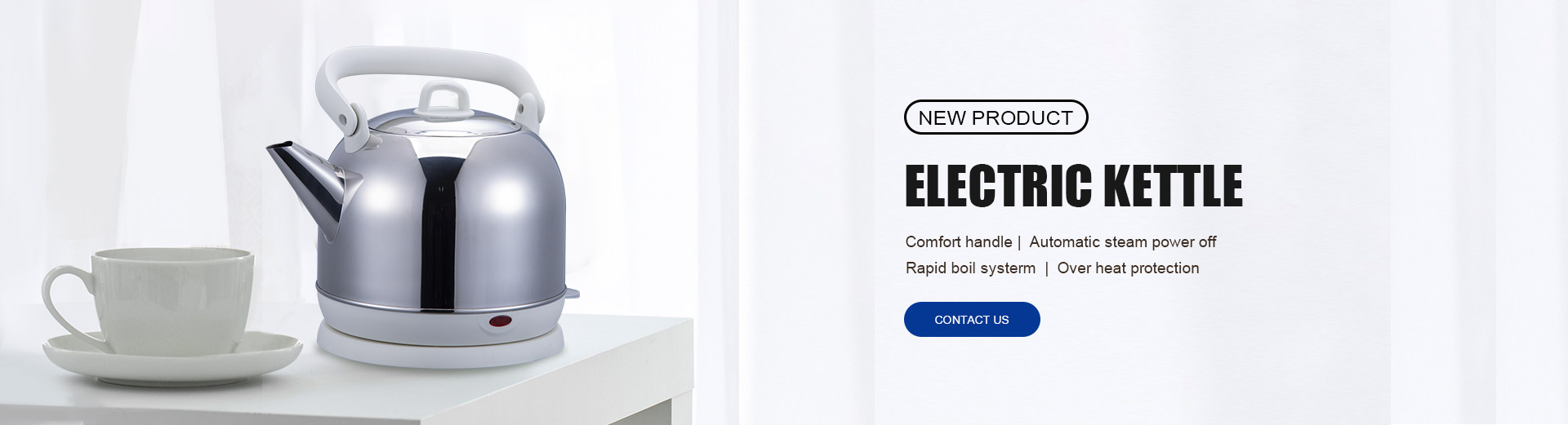
Commercial electric kettles are designed for frequent and high-volume use, while household electric kettles focus on daily convenience and home applications. The right choice depends on usage requirements, capacity needs, and product positioning.
Electric kettle applications vary greatly between homes and professional environments.
Household users usually need:
Convenient operation
Compact design
Moderate capacity
Simple functions
Commercial users often require:
Higher durability
Larger capacity
Frequent operation capability
Stronger performance
Understanding these differences helps brands and buyers select products that match specific usage scenarios.
The main difference is the intended application and performance requirements.
commercial kettles are designed for environments with frequent use, such as:
Hotels
Restaurants
Offices
Catering facilities
They focus on:
Durability
Stable operation
Higher output
Long service life
Household kettles are designed for everyday residential use.
They focus on:
User convenience
Compact size
Easy operation
Attractive appearance
Capacity is one of the most obvious differences.
Commercial applications often require larger volumes because multiple users need hot water.
Advantages include:
Fewer refilling times
Higher serving efficiency
Better support for continuous use
Household kettles usually focus on:
Individual or family use
Space efficiency
Faster preparation for smaller amounts
The suitable capacity depends on daily usage requirements.
Durability requirements are different between commercial and household applications.
Commercial products need to withstand:
Frequent operation
Longer working hours
Higher usage frequency
Manufacturers focus on:
Stronger structures
Reliable components
Improved testing procedures
Household kettles need to provide:
Safe daily operation
Reliable performance
Good user experience
They are designed around normal residential usage patterns.
Different applications require different manufacturing approaches.
| Factor | Commercial Electric Kettle | Household Electric Kettle |
|---|---|---|
| Usage Frequency | High | Moderate |
| Capacity | Usually larger | Usually smaller |
| Structure | More durable design | More compact design |
| Main Focus | Performance and reliability | Convenience and appearance |
| Application | Hotels, restaurants, offices | Homes and personal use |
Manufacturers adjust product design and production processes according to application requirements.
Heating performance affects efficiency and user experience.
Commercial products may require:
Faster heating
Stable temperature control
Continuous operation capability
They are designed to support frequent hot water demand.
Household products usually focus on:
Efficient daily boiling
Simple operation
Energy-conscious use
They are optimized for normal home consumption.
Design priorities differ based on users.
Commercial designs emphasize:
Practicality
Strength
Easy maintenance
Common features include:
Larger handles
Stronger structures
Higher capacity
Household designs emphasize:
Appearance
Kitchen matching
User comfort
Manufacturers often customize:
Colors
Shapes
Surface finishes
Cost differences come from design requirements and manufacturing standards.
Higher costs may result from:
Stronger materials
Larger capacity
More durable components
Additional testing
Costs are influenced by:
Materials
Functions
Design features
Production volume
The right product choice depends on balancing performance and budget requirements.
OEM projects should begin with clear market positioning.
Suitable for:
Hospitality brands
Catering suppliers
Professional users
Customization may include:
Capacity
Materials
Functional features
Structural improvements
Suitable for:
Consumer appliance brands
Retail markets
Home appliance products
Customization may focus on:
Appearance
User experience
Packaging design
Quality requirements vary depending on usage intensity.
Manufacturers focus on:
Long-term operation
Structural strength
Component reliability
Manufacturers focus on:
Electrical safety
Heating performance
User operation
Both require strict quality management to ensure reliable products.
Experienced manufacturers evaluate:
Usage environment
Market requirements
Product positioning
Production expectations
Professional support includes:
Material recommendations
Design optimization
Manufacturing solutions
Quality control planning
This helps create products that match different customer needs.
Different markets require different product strategies.
Suitable products usually require:
Higher durability
Larger capacity
Stable performance
Suitable products usually require:
Attractive design
Easy operation
Cost efficiency
The best choice depends on customer expectations and application scenarios.
Commercial and household electric kettles serve different purposes.
Commercial kettles focus on durability, capacity, and frequent operation, while household kettles focus on convenience, appearance, and daily usability.
By understanding application differences and working with an experienced electric kettle manufacturer, brands can develop products that match market requirements and deliver reliable performance.