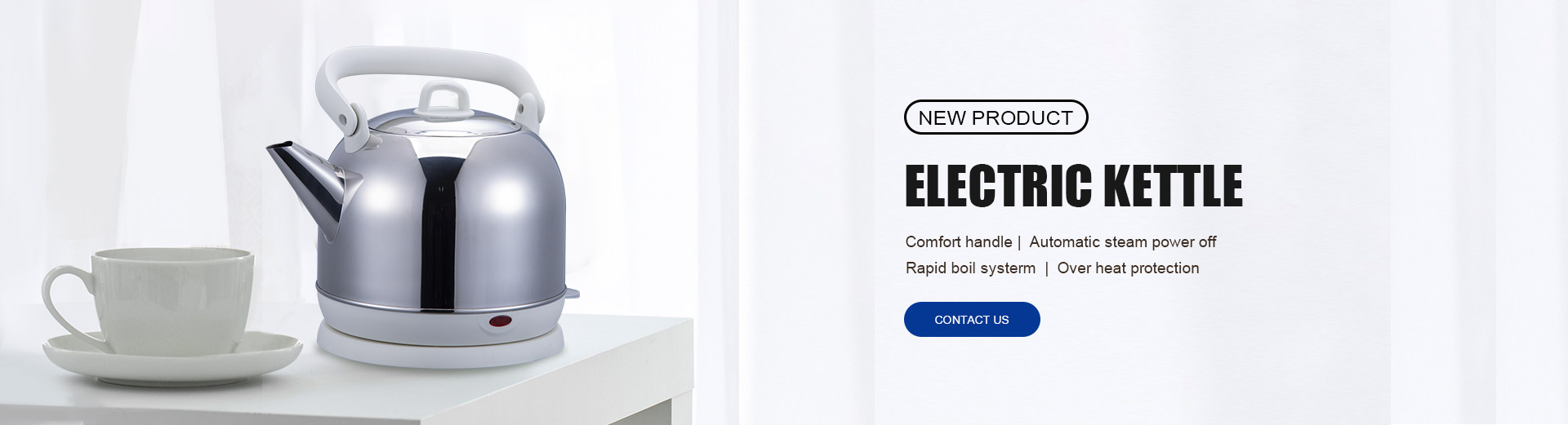
Temperature control kettles provide more functional value through precise temperature adjustment and enhanced user experience, while standard electric kettles offer simpler operation and cost efficiency.
Modern consumers increasingly expect kitchen appliances to provide more than basic functions.
electric kettles are now designed around:
Convenience
User preferences
Energy efficiency
Different beverage requirements
The main difference between temperature control kettles and standard electric kettles is the ability to manage heating temperature.
For brands developing electric kettle products, the choice depends on:
Target users
Market positioning
Product functions
Cost expectations
The key difference is the level of heating control.
Temperature control kettles allow users to select or maintain specific temperatures.
Common features include:
Multiple temperature settings
Digital controls
Temperature display
Keep-warm functions
They focus on personalized user experiences.
Standard kettles are designed for simple boiling.
Main functions include:
Heating water
Automatic shut-off
Basic safety protection
They focus on reliability and affordability.
Temperature management is the biggest advantage of temperature control kettles.
Users can adjust heating according to different needs, such as:
Tea preparation
Coffee brewing
Baby formula preparation
Specialty beverages
Precise temperature control improves convenience and product value.
Standard kettles usually heat water until boiling and then automatically stop.
They are suitable when:
Exact temperature is not required
Simple operation is preferred
Cost efficiency is important
User experience depends on how consumers use the kettle.
Advantages include:
More control over water temperature
Better beverage preparation
More premium interaction
It is suitable for users who value:
Convenience
Personalization
Advanced functions
Advantages include:
Easy operation
Simple controls
Fast daily use
It remains popular because of its straightforward functionality.
Additional functions can increase product differentiation.
Temperature control kettles provide value through:
One product can support different needs, including:
Hot water preparation
Tea brewing
Coffee preparation
Temperature-sensitive drinks
Advanced functions help brands create products with:
Higher perceived value
Better user experience
Stronger market differentiation
Standard kettles continue to be popular because they provide practical advantages.
Benefits include:
Lower cost
Simple operation
Easy maintenance
Reliable performance
They are suitable for markets where basic boiling functions meet customer expectations.
Temperature control and standard kettles require different production approaches.
| Factor | Temperature Control Kettle | Standard Electric Kettle |
|---|---|---|
| Function | Precise temperature adjustment | Basic boiling |
| Components | More electronic parts | Simpler structure |
| Manufacturing Complexity | Higher | Lower |
| Product Positioning | Premium | Mass market |
| Main Advantage | Functional value | Cost efficiency |
Manufacturers need different quality control methods depending on product complexity.
For OEM projects, additional functions require more development planning.
Temperature control kettle customization may involve:
Control panels
Display systems
Electronic components
Software settings
User interface design
Manufacturers need to manage:
Functional testing
Electrical safety
Component reliability
Premium markets often value:
Product innovation
User experience
Advanced functions
Temperature control kettles support premium positioning through:
Smart features
Better usability
Higher functionality
However, premium value can also come from:
Material quality
Design
Safety features
Manufacturing quality
Standard electric kettles are often suitable for markets focused on affordability.
Advantages include:
Lower production cost
Simpler manufacturing
Easier maintenance
They are commonly used for:
Large-volume retail products
Basic household appliances
Entry-level markets
Temperature control systems require strict quality management.
Manufacturers focus on:
Checking:
Heating control accuracy
Temperature consistency
Sensor performance
Evaluating:
Component safety
Circuit reliability
Product protection
Confirming:
Control operation
Display accuracy
Keep-warm functions
Professional testing ensures reliable performance.
The right choice depends on product strategy.
Choose temperature control kettles when:
Users need precise heating
Premium positioning is important
Functional differentiation is required
Choose standard kettles when:
Basic boiling is sufficient
Cost control is the priority
Large-volume production is required
Experienced manufacturers evaluate:
Target market
Product functions
Cost objectives
Manufacturing feasibility
Professional support includes:
Product design suggestions
Component selection
Quality planning
Production optimization
This helps brands create products that match market expectations.
Temperature control and standard electric kettles serve different customer needs.
Temperature control kettles provide higher functional value through precise heating and personalized experiences, while standard kettles deliver reliable performance with simpler designs.
By selecting suitable functions and working with an experienced electric kettle manufacturer, brands can develop products that achieve the right balance between innovation, cost, and market demand.