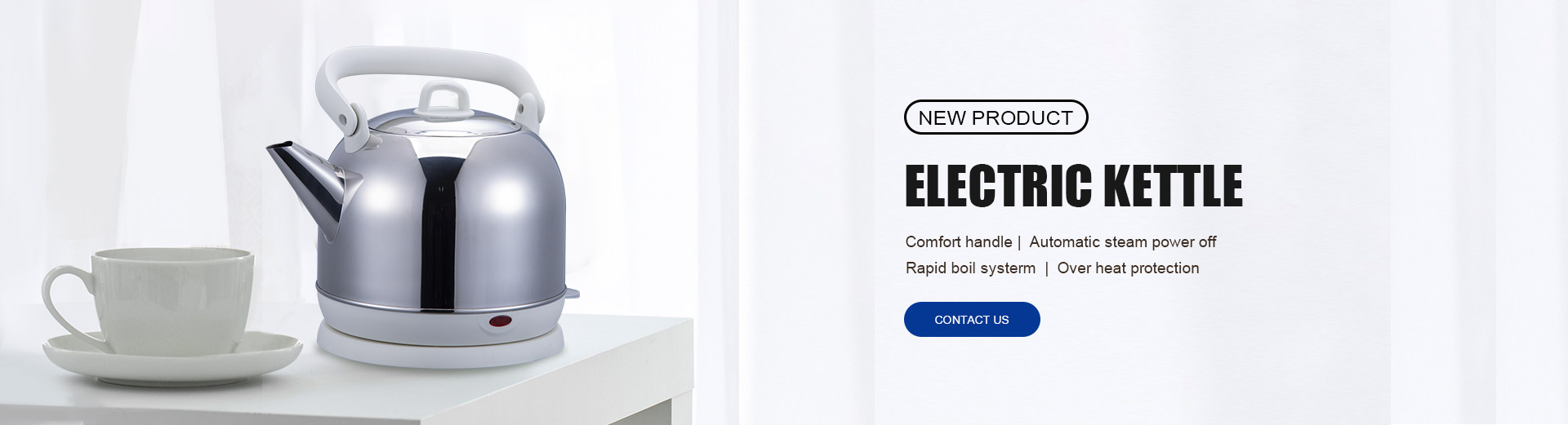
Large capacity electric kettles are suitable for high-volume usage scenarios, while small capacity electric kettles provide convenience and efficiency for individual or limited use. The right choice depends on application needs and market positioning.
Capacity is an important factor affecting electric kettle performance, user experience, and product positioning.
Different users have different requirements for:
Water volume
Heating frequency
Product size
Energy consumption
Usage environment
For manufacturers developing electric kettle products, selecting the right capacity helps match products with specific markets and applications.
Large and small capacity kettles are designed for different user scenarios rather than one being universally better.
The main difference is the amount of water the kettle can heat at one time.
Large capacity kettles are designed for:
More water preparation
Multiple users
Frequent serving needs
They usually require:
Larger kettle bodies
Stronger structures
Higher material usage
Small capacity kettles focus on:
Compact size
Quick operation
Easy storage
They are often designed for:
Individual users
Small households
Limited spaces
Household requirements vary depending on family size and usage habits.
Large capacity kettles are suitable for:
Large families
Homes with frequent guests
Users who prepare multiple drinks
Advantages include:
Fewer refilling times
More efficient for multiple users
Better for frequent consumption
Small capacity kettles are suitable for:
Single users
Couples
Small kitchens
Advantages include:
Space-saving design
Faster preparation for small amounts
Lower storage requirements
Commercial environments often require larger water volumes.
Large capacity kettles are suitable for:
Offices
Hotels
Restaurants
Meeting spaces
Benefits include:
Higher serving efficiency
Reduced repeated boiling
Better support for multiple users
small kettles may be suitable for:
Personal office use
Hotel guest rooms
Small service areas
The selection depends on expected usage frequency and user numbers.
Capacity influences heating time and energy requirements.
Larger water volumes require:
More heating power
Longer boiling time
Stronger structural design
Manufacturers need to balance:
Heating efficiency
Product safety
User expectations
Smaller kettles generally provide:
Faster heating for limited water volumes
Lower energy requirements
Easier operation
They are suitable for users who need quick preparation.
Different capacities require different design considerations.
Manufacturers focus on:
Body strength
Handle durability
Heat distribution
User handling safety
Because more water creates greater weight, structural design is especially important.
Manufacturers prioritize:
Compact structure
Lightweight handling
Space efficiency
The design often focuses on convenience and portability.
Capacity affects material usage and production requirements.
| Factor | Large Capacity Kettle | Small Capacity Kettle |
|---|---|---|
| Material Usage | Higher | Lower |
| Product Size | Larger | More compact |
| Heating Requirements | Higher | Lower |
| Manufacturing Cost | Usually higher | Usually lower |
| Main Advantage | Higher volume | Better convenience |
Manufacturers evaluate capacity together with product positioning and target pricing.
OEM projects require selecting capacity based on market demand.
Suitable for:
Commercial product lines
Family-oriented products
High-volume usage markets
Customization options include:
Body design
Handle structure
Heating system
Exterior finishing
Suitable for:
Compact appliance markets
Travel-related products
Individual user segments
Customization focuses on:
Lightweight design
Appearance
Convenience features
Product size influences logistics requirements.
May require:
Larger packaging
More protection materials
Higher shipping space
Manufacturers need to optimize packaging to balance protection and logistics cost.
Benefits include:
Easier transportation
Lower storage requirements
More efficient shipping arrangements
Energy efficiency depends on usage patterns.
large kettles can be more efficient when:
Multiple users need water
Large quantities are prepared at once
They reduce the need for repeated boiling.
small kettles may save energy when:
Only a small amount of water is needed
Users do not require frequent boiling
The most efficient choice depends on actual usage scenarios.
Experienced electric kettle manufacturers evaluate:
Target market
User habits
Product positioning
Cost requirements
Production feasibility
Professional suggestions help brands avoid selecting capacity based only on product appearance.
Capacity is closely connected with product strategy.
May focus on:
Larger capacity
Better materials
Advanced functions
Enhanced user experience
May focus on:
Affordable pricing
Compact design
Basic functions
The suitable capacity should match customer expectations.
Large and small capacity electric kettles serve different application needs.
Large capacity kettles provide better solutions for high-volume usage, commercial applications, and larger households. Small capacity kettles offer convenience, compact design, and efficient operation for individual users and limited spaces.
By selecting the right capacity and working with an experienced electric kettle manufacturer, brands can develop products that match market needs, control production costs, and provide better user experiences.