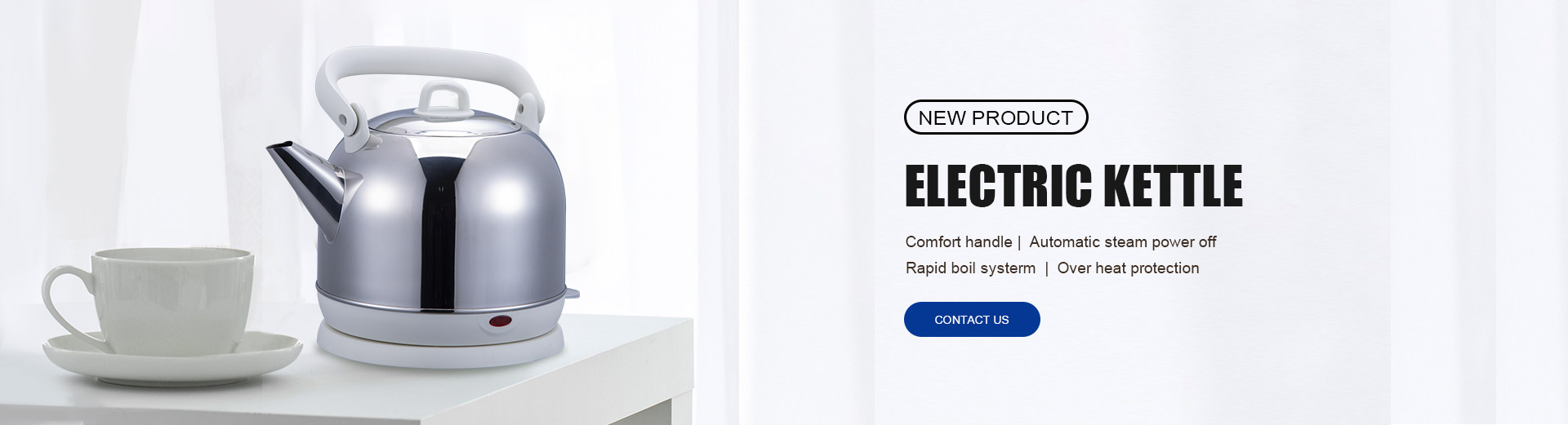
Cordless electric kettles are generally better suited for modern kitchens because they provide greater flexibility and convenience, while corded electric kettles offer simple structure and cost advantages.
Kitchen appliances are increasingly designed around convenience, safety, and user experience.
The connection design of an electric kettle affects:
Daily operation
Kitchen layout
Product appearance
User convenience
Manufacturing approach
When choosing between cordless and corded electric kettles, brands need to consider:
Target consumers
Market positioning
Product features
Price expectations
Both designs have advantages depending on the intended application.
The main difference is how the kettle connects to the power supply.
A cordless kettle uses a detachable power base.
The kettle body can be lifted away from the base after heating.
Advantages include:
Flexible pouring
Easier handling
Cleaner appearance
Improved kitchen convenience
A corded kettle connects directly to the power cable.
Advantages include:
Simpler structure
Lower production complexity
More cost-effective design
It is often suitable for basic appliance markets.
Convenience is one of the main reasons cordless kettles are popular in modern kitchens.
Users can:
Lift the kettle freely
Pour water from different positions
Move the kettle easily
The detachable design improves daily operation, especially when serving multiple cups or filling containers.
Corded designs may limit movement because the power connection remains attached.
They are suitable when:
The kettle stays in one location
Cost is a priority
Basic functionality is required
Modern kitchens often value clean and organized designs.
The separate base creates:
Cleaner countertop appearance
More modern product styling
Better visual integration
This makes cordless kettles popular for premium kitchen appliance markets.
Corded models usually have:
Simpler construction
Traditional appearance
Functional design focus
They are often positioned for practical and economical applications.
Safety depends on overall product design and manufacturing quality.
The detachable structure can reduce:
Cable management issues
User handling inconvenience
Many cordless kettles also integrate:
Automatic shut-off
Boil-dry protection
Stable base connections
Corded kettles require proper management of:
Power cable design
Cable durability
Electrical protection
Professional manufacturing control is essential for both designs.
Manufacturing complexity affects production cost and development time.
Requires additional control of:
Power base design
Electrical connection structure
Base compatibility
Manufacturers need to ensure:
Stable contact points
Reliable electrical connection
Accurate assembly
Usually has:
Simpler structure
Fewer components
Easier assembly process
This can provide cost advantages for high-volume economical products.
The suitable design depends on product positioning.
Suitable for:
Premium kitchen appliances
Modern lifestyle products
Brand-focused products
Customization options include:
Base design
Handle style
Surface finish
Product functions
Suitable for:
Entry-level products
Cost-sensitive markets
Large-volume orders
The simpler structure may help control manufacturing costs.
The connection structure affects production costs.
| Factor | Cordless Electric Kettle | Corded Electric Kettle |
|---|---|---|
| Structure | More complex | Simpler |
| Components | More parts required | Fewer components |
| Production Cost | Usually higher | Usually lower |
| User Convenience | Higher | Basic |
| Market Positioning | Premium | Economy |
The final cost depends on:
Materials
Functions
Production volume
Customization requirements
Different markets have different expectations.
Often suitable for:
Premium household appliances
Modern kitchens
Lifestyle product categories
Often suitable for:
Budget appliance markets
Basic household applications
High-volume products
Market research helps determine the most suitable product design.
Cordless designs require precise manufacturing control.
Manufacturers focus on:
Checking:
Contact stability
Electrical performance
Mechanical fit
Ensuring:
Proper alignment
Smooth placement
Long-term durability
Including:
Electrical testing
Functional testing
Performance verification
Professional quality control helps maintain reliable operation.
The choice between cordless and corded designs depends on brand strategy.
Cordless kettles often support premium value through:
Better user experience
Modern appearance
Functional convenience
Corded kettles provide advantages through:
Lower production cost
Simple operation
Efficient manufacturing
Manufacturers help brands select designs based on target customers and market goals.
Cordless and corded electric kettles serve different market needs.
Cordless kettles provide flexibility, convenience, and modern design advantages, while corded kettles offer simpler structures and cost efficiency.
The best choice depends on product positioning, customer expectations, and manufacturing objectives.
By selecting the appropriate design and working with an experienced electric kettle manufacturer, brands can develop products that balance usability, quality, and market competitiveness.