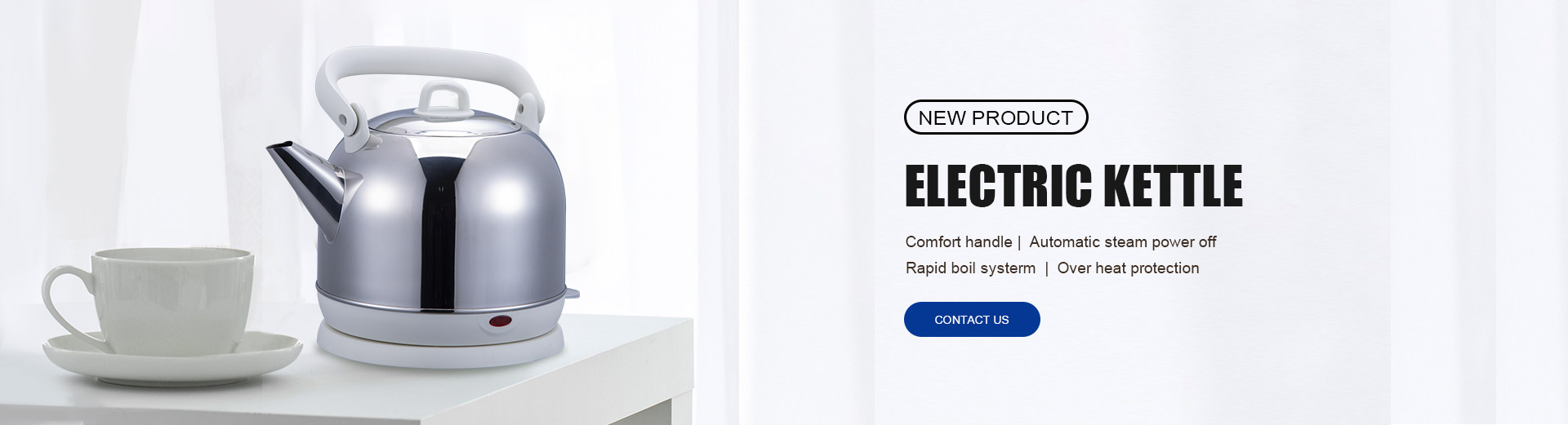
Stainless steel electric kettles generally provide better long-term value through durability and premium positioning, while plastic electric kettles offer advantages in lightweight design and cost efficiency.
The material of an electric kettle influences product durability, appearance, manufacturing cost, user experience, and market positioning.
For brands developing electric kettle products, the choice between plastic and stainless steel depends on:
Target customers
Product price range
Usage environment
Design requirements
Expected product lifespan
Neither material is suitable for every market. The right choice depends on balancing performance, cost, and customer expectations.
The biggest difference comes from the material characteristics.
Plastic kettles are commonly valued for:
Lightweight structure
Flexible design options
Lower production costs
Easy color customization
They are often used for:
Entry-level products
Budget-focused markets
Large-volume consumer appliances
Stainless Steel Kettles are known for:
Strong durability
Premium appearance
Better structural strength
Longer service life
They are commonly positioned for:
Mid-to-high-end markets
Premium household appliances
Commercial applications
Durability is one of the most important factors affecting long-term value.
Stainless steel provides:
Higher impact resistance
Stronger body structure
Better resistance to daily wear
It is suitable for users who expect products to maintain appearance and performance over a longer period.
Modern engineering plastics can provide:
Good heat resistance
Lightweight performance
Structural stability
However, compared with stainless steel, plastic products may require more attention to:
Surface aging
Scratches
Long-term appearance maintenance
Heat performance depends on both material selection and product structure.
Stainless steel provides:
Strong thermal resistance
Stable body structure
Reliable performance under repeated heating
High-quality heat-resistant plastics are designed for electric kettle applications.
Advantages include:
Lower exterior temperature in some designs
Lightweight handling
Flexible structural options
Manufacturers select materials according to safety standards and product positioning.
Appearance influences product perception and market value.
Manufacturers can create different styles through:
Brushed finishes
Mirror polishing
Matte surfaces
Color coatings
These finishes help create premium product appearances.
Plastic materials allow:
More color choices
More flexible shapes
Lightweight designs
This makes plastic kettles suitable for brands targeting colorful and affordable product lines.
Premium markets usually focus on:
Material quality
Product durability
Design appearance
User experience
Stainless steel supports premium positioning through:
Metal texture
Strong construction
High perceived value
Some premium plastic kettles use:
Advanced materials
Modern shapes
Special surface treatments
The best choice depends on brand positioning and customer expectations.
Production costs vary because the manufacturing processes are different.
| Factor | Plastic Electric Kettle | Stainless Steel Electric Kettle |
|---|---|---|
| Material Cost | Usually lower | Usually higher |
| Weight | Lighter | Heavier |
| Design Flexibility | High | Moderate |
| Processing Method | Injection molding | Metal forming and finishing |
| Product Positioning | Cost-effective | Premium and durable |
Manufacturers evaluate cost together with product goals rather than choosing materials only by price.
OEM projects require considering customization requirements.
Suitable for:
Custom colors
Lightweight products
Cost-sensitive markets
Large-volume production
Customization options include:
Housing colors
Shapes
Surface textures
Suitable for:
Premium product lines
Durable product positioning
Commercial applications
Customization options include:
Surface finishing
Body design
Handle structures
Product lifespan depends on:
Material quality
Manufacturing process
Usage environment
Quality control
The strong structure helps maintain:
Product appearance
Mechanical strength
Long-term reliability
High-quality plastics can provide reliable service when properly designed and manufactured.
Professional material selection and testing are essential for both types.
Maintenance requirements affect long-term user experience.
Advantages:
Easy cleaning
Resistant to daily wear
Maintains premium appearance
Advantages:
Lightweight handling
Easy product design updates
Practical daily use
Both materials can provide good user experiences with proper manufacturing quality.
Different markets may prefer different product characteristics.
| Market Preference | Suitable Material |
|---|---|
| Premium kitchen appliances | Stainless steel |
| Budget consumer products | Plastic |
| Commercial usage | Stainless steel |
| Color-focused product lines | Plastic |
| Long-term durability focus | Stainless steel |
Market research helps determine the most suitable material strategy.
Experienced manufacturers evaluate:
Target market
Product positioning
Cost requirements
Performance expectations
Manufacturing feasibility
Professional recommendations help brands avoid choosing materials based only on initial cost.
Plastic and stainless steel electric kettles each have different advantages.
Plastic kettles provide cost efficiency, lightweight design, and flexible customization, while stainless steel kettles offer durability, premium appearance, and stronger long-term performance.
The best material choice depends on product positioning, customer expectations, and market strategy.
By selecting suitable materials and working with experienced electric kettle manufacturers, brands can create products with better value, reliable quality, and stronger market competitiveness.