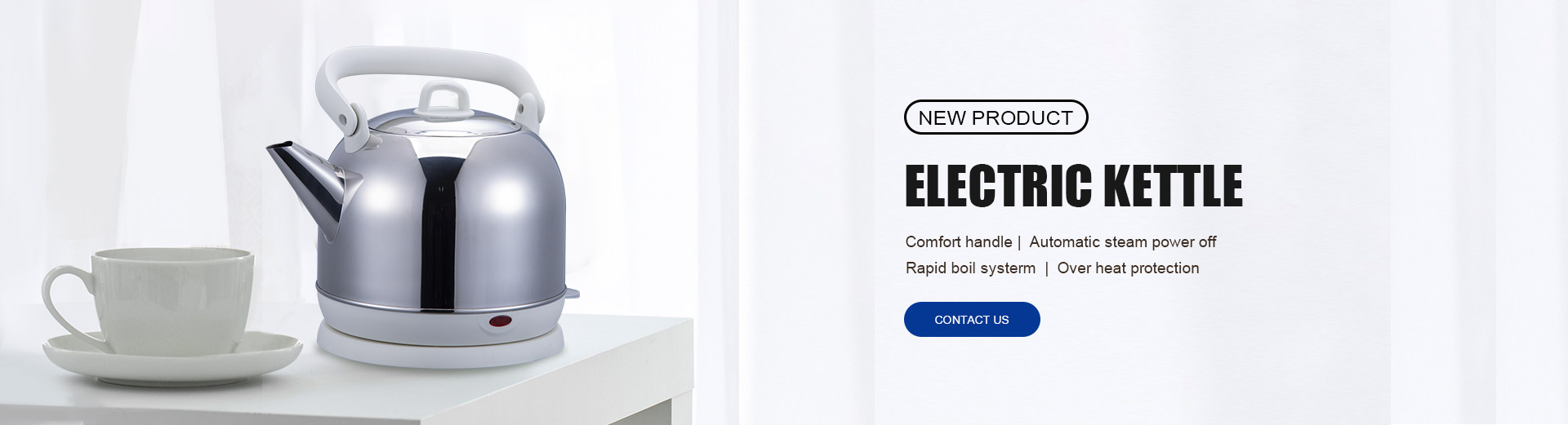
Double wall electric kettles provide better heat protection because the insulated structure reduces external heat transfer, while single wall kettles offer a simpler design with lower manufacturing costs.
Heat protection affects user safety, energy efficiency, and product experience.
During operation, electric kettles reach high temperatures while heating water. The kettle structure determines how effectively heat is retained and how safely the exterior surface can be touched.
For manufacturers and brands, choosing between double wall and single wall designs depends on:
Target market
Product positioning
Safety expectations
Cost requirements
Usage environment
Both designs have their own advantages, but they serve different application needs.
The main difference is the internal structure of the kettle body.
A double wall kettle uses two layers of material with an insulation space between them.
The structure helps:
Reduce heat transfer
Maintain water temperature
Lower exterior surface temperature
A single wall kettle uses one layer of material for the body structure.
It provides:
Simple construction
Efficient heating performance
Lower production complexity
However, heat from the water transfers more directly to the outer surface.
double wall electric kettles generally provide better insulation performance.
The insulated structure helps:
Keep water hot longer
Reduce heat loss
Improve energy efficiency
Provide safer exterior temperatures
This design is suitable for users who value temperature retention and safety.
Single wall kettles transfer heat more quickly from the inner container to the outside surface.
Advantages include:
Faster heat dissipation
Simpler structure
Lower manufacturing cost
They are often suitable for markets where basic boiling functions are the main requirement.
Safety is an important consideration for electric kettle development.
The outer wall remains cooler because the insulation layer reduces direct heat transfer.
Benefits include:
Reduced burn risk
Safer handling
Better family usage experience
This makes double wall kettles popular for:
Family kitchens
Premium appliance markets
Safety-focused products
Single wall kettles require more attention because the outer surface may become hot during operation.
Manufacturers usually improve safety through:
Heat-resistant handles
Warning labels
Ergonomic design
Temperature retention is one of the biggest differences between the two designs.
The insulation structure slows heat loss after boiling.
It can help:
Maintain water temperature
Reduce repeated heating needs
Improve user convenience
Single wall kettles release heat more quickly because there is no insulation layer.
They are suitable when users mainly need:
Quick boiling
Immediate consumption
Simple operation
Energy efficiency depends on how the kettle is used.
Because heat loss is reduced, double wall kettles may help:
Maintain temperature longer
Reduce unnecessary reheating
Single wall kettles may have advantages in:
Faster heat release
Simpler heating process
The better option depends on whether the product focuses on temperature retention or basic boiling efficiency.
The two designs require different manufacturing approaches.
| Feature | Double Wall Kettle | Single Wall Kettle |
|---|---|---|
| Body Structure | Two-layer construction | Single-layer construction |
| Insulation Performance | Higher | Lower |
| Manufacturing Complexity | More processes | Simpler processes |
| Material Usage | More materials required | Lower material usage |
| Product Positioning | Premium and safety-focused | Basic and cost-effective |
Double wall designs require more precise manufacturing control because multiple layers must be properly assembled.
The suitable design depends on product positioning and market requirements.
Premium product lines
Safety-focused markets
Long-term heat retention needs
Higher-value appliance categories
Entry-level products
Cost-sensitive markets
Basic household applications
Large-volume economical products
OEM manufacturers can help select the right structure based on target customers and pricing strategy.
The structure difference affects manufacturing costs.
Higher costs may come from:
Additional materials
More complex assembly
Higher production requirements
Lower costs are usually related to:
Simpler construction
Fewer components
Easier manufacturing processes
For large-scale projects, manufacturers evaluate cost together with product value and market positioning.
Material choice influences both performance and production results.
Common considerations include:
Provides:
Strong durability
Good insulation performance
Premium appearance
May provide:
Additional heat protection
Lightweight structure
Different design possibilities
Manufacturers select materials based on safety requirements, appearance goals, and cost targets.
Double wall kettle production requires attention to:
Layer alignment
Sealing quality
Structural stability
Insulation performance
Quality control focuses on:
Assembly accuracy
Leakage prevention
Thermal performance testing
Professional manufacturing processes help ensure consistent product performance.
Heat protection affects how consumers perceive product quality, safety, and value.
double wall electric kettles provide stronger insulation and safer exterior temperatures, while single wall kettles offer simpler structures and cost advantages.
The right choice depends on market needs, product positioning, and customer expectations.
By selecting suitable designs and working with experienced manufacturers, brands can develop electric kettles with the right balance of performance, safety, and cost.