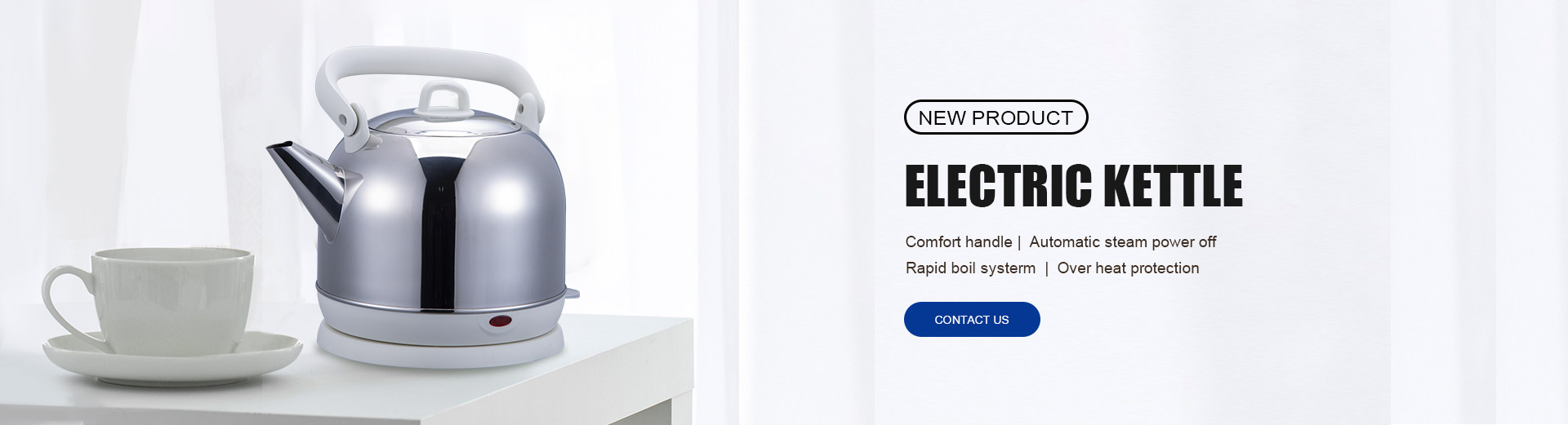
Stainless steel electric kettles are often preferred for durability and commercial applications, while glass electric kettles are popular for modern designs and visual appeal. The better choice depends on market positioning and customer requirements.
The material of an electric kettle affects product appearance, durability, manufacturing cost, and target customer preferences.
For brands and distributors, choosing between stainless steel and Glass Kettles requires considering:
Target market
Product positioning
Consumer expectations
Usage environment
Price range
Both stainless steel and glass electric kettles have their own advantages. The right choice depends on the product strategy rather than one material being suitable for every market.
The biggest difference comes from their material characteristics.
Stainless Steel Kettles are known for:
High durability
Strong impact resistance
Long service life
Professional appearance
They are commonly used for products targeting:
Daily household use
Hotels
Offices
Commercial applications
Glass kettles are recognized for:
Transparent appearance
Modern design
Visible boiling process
Premium visual experience
They are often suitable for:
Contemporary kitchens
Design-focused markets
Lifestyle appliance segments
Durability is an important factor for markets that require long-term use.
Stainless steel offers:
Better resistance to impact
Strong structural performance
Lower risk of cracking
This makes stainless steel kettles suitable for environments where products may experience frequent handling.
Glass electric kettles use heat-resistant glass designed for boiling applications.
However, compared with stainless steel, glass requires more attention during:
Transportation
Handling
Packaging design
For markets prioritizing rugged performance, stainless steel often provides practical advantages.
Appearance plays an important role in consumer purchasing decisions.
Stainless steel kettles can achieve different appearances through:
Brushed finishes
Mirror polishing
Matte surfaces
Colored coatings
These options allow manufacturers to create both classic and premium designs.
Glass kettles provide unique visual advantages:
Transparent body
Visible water level
LED lighting effects
Modern kitchen appearance
For markets where design and user experience are important, glass kettles can create stronger visual appeal.
Premium markets often focus on design, materials, and user experience.
Glass kettles can support premium positioning through:
Elegant appearance
Transparent design
Modern technology features
They are often suitable for brands targeting lifestyle-oriented consumers.
Stainless steel kettles create premium value through:
High-quality materials
Refined finishes
Strong durability
They are often positioned as reliable and long-lasting products.
The choice depends on whether the market values visual design or material performance more.
Customization capability is important for OEM and ODM electric kettle projects.
Manufacturers can customize:
Body shape
Surface finish
Handle design
Color treatment
Stainless steel provides flexibility for different product styles.
Glass kettle customization may focus on:
Glass shape
Handle design
Base structure
LED functions
Decorative elements
Each material has different manufacturing considerations during customization.
Manufacturing requirements differ between stainless steel and glass kettles.
Manufacturing usually involves:
Metal forming
Welding
Surface treatment
Assembly
Quality control focuses on:
Welding strength
Surface consistency
Structural accuracy
Manufacturing requires control of:
Glass forming
Component matching
Assembly precision
Safety inspection
Both require professional manufacturing processes to ensure product reliability.
Different regions may prefer different product characteristics.
| Market Requirement | More Suitable Choice |
|---|---|
| Long-term durability | Stainless steel kettle |
| Modern kitchen design | Glass kettle |
| Commercial usage | Stainless steel kettle |
| Premium lifestyle products | Glass kettle |
| Frequent transportation | Stainless steel kettle |
| Visual product display | Glass kettle |
Market research and customer positioning should guide material selection.
Cost depends on:
Material price
Manufacturing process
Product design
Functions
Order quantity
Costs are influenced by:
Stainless steel grade
Surface treatment
Metal processing requirements
Costs may be affected by:
Glass quality
Structural design
Packaging requirements
The lowest production cost is not always the best choice. Product positioning should match the target market.
For OEM projects, the best material depends on the brand strategy.
The product requires:
High durability
Commercial applications
Long-term usage
Strong structural performance
The product focuses on:
Modern appearance
Premium design
Visual experience
Lifestyle positioning
Professional manufacturers can help evaluate materials based on production requirements and market goals.
Experienced electric kettle manufacturers consider multiple factors before recommending materials.
Evaluation includes:
Target market
Product positioning
Manufacturing feasibility
Cost objectives
Quality expectations
A professional manufacturer can balance design, performance, and production efficiency.
Stainless steel and glass electric kettles serve different market needs.
Stainless steel provides durability, strength, and practical value, while glass offers modern design and visual appeal.
The best choice depends on customer expectations, market positioning, and product strategy.
By selecting the right material and working with an experienced electric kettle manufacturer, brands can develop products with suitable performance, appearance, and market competitiveness.