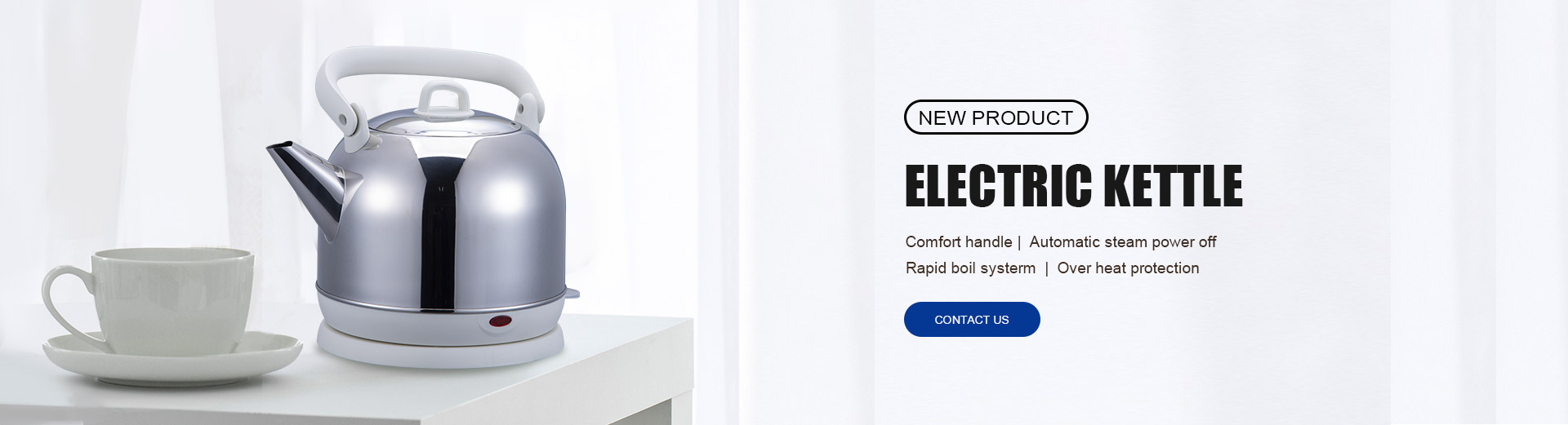
Factories reduce quality risks in custom kettle orders through early design review, material control, process management, prototype testing, and continuous quality inspections.
Custom electric kettle orders often involve unique designs, materials, functions, and production requirements, making quality management more complex than standard products.
A customized kettle may require adjustments in:
Product structure
Material selection
Surface finishing
Component specifications
Packaging requirements
Each change can affect manufacturing processes and final product performance. Without effective quality control, potential issues may appear during mass production.
Professional factories reduce these risks by establishing quality checkpoints from product development to final shipment.
The first step in reducing quality risks is evaluating the product design before production begins.
During design review, factories analyze:
Engineers check whether components such as:
Kettle body
Handle
Lid
Heating system
Power base
can work together properly.
A design may look attractive but still create production challenges. Factories evaluate whether the design can be produced efficiently with available processes and equipment.
Design reviews also consider:
Grip comfort
Pouring control
Cleaning convenience
Daily operation safety
Early design evaluation helps prevent costly modifications during mass production.
Material selection directly affects kettle safety, durability, and appearance.
Factories reduce material-related risks through:
Reliable material sources help maintain:
Stable quality
Consistent specifications
Production reliability
Before production, factories check:
Stainless steel quality
Plastic material performance
Component specifications
Different materials must work together properly, especially when combining:
Stainless steel
Engineering plastics
Electrical components
Proper material control reduces defects caused by unsuitable materials.
Prototype testing allows factories to identify potential problems before mass production.
During prototype evaluation, manufacturers review:
Product appearance
Structural strength
Functional performance
Assembly process
Common prototype tests include:
Checking whether the final sample matches the approved design.
Evaluating:
Heating performance
Switch operation
Safety functions
Confirming that all components fit correctly.
Prototype testing helps reduce unexpected issues during large-volume production.
Production process control is essential for maintaining consistent quality in custom kettle orders.
Factories manage:
Quality control focuses on:
Forming accuracy
Welding strength
Surface condition
Inspection ensures:
Component accuracy
Stable dimensions
Smooth appearance
Workers and inspection teams verify:
Component installation
Electrical connections
Product structure
Process control helps maintain the same quality level across every production batch.
Quality inspection at different production stages helps detect problems early.
A typical inspection system includes:
| Inspection Stage | Main Purpose |
|---|---|
| Incoming inspection | Verify raw material quality |
| Process inspection | Monitor manufacturing stability |
| Assembly inspection | Confirm component accuracy |
| Final inspection | Verify finished product performance |
Multiple inspection points reduce the chance of defective products reaching customers.
Customized kettles often require special surface treatments, which can create appearance-related risks.
Common challenges include:
Uneven brushing texture
Color differences
Coating defects
Surface scratches
Factories reduce these risks through:
Standardized finishing procedures
Sample approval before production
Surface inspection during manufacturing
Batch consistency checks
Proper surface management helps maintain the expected premium appearance.
Functional testing verifies whether customized kettles perform correctly before shipment.
Common tests include:
Checking:
Power system performance
Insulation safety
Electrical stability
Evaluating:
Heating operation
Boiling performance
Temperature control
Testing:
Handle strength
Lid operation
Repeated usage performance
Testing helps identify hidden problems that may not appear during visual inspection.
Custom orders may require design updates or production adjustments.
Factories reduce risks by controlling:
Engineering change procedures
Sample approval processes
Production documentation
Communication between teams
Clear change management prevents incorrect specifications from entering production.
Factories with OEM and ODM experience understand how to convert product concepts into manufacturable solutions.
Experience helps improve:
Design optimization
Material selection
Process planning
Quality control methods
Manufacturers can identify potential problems earlier because they understand the relationship between design decisions and production outcomes.
Large-volume custom orders require strong production management systems.
Factories maintain consistency through:
Standard operating procedures
Worker training
Equipment maintenance
Production monitoring
Quality records
These systems help ensure that every unit meets the approved product requirements.
Reducing quality risks requires control throughout the entire manufacturing process, not only final inspection.
From design evaluation and material selection to production monitoring and shipment testing, each stage influences the final product quality.
Factories with professional quality management systems can deliver customized electric kettles with reliable performance, consistent appearance, and stable manufacturing results for global markets.