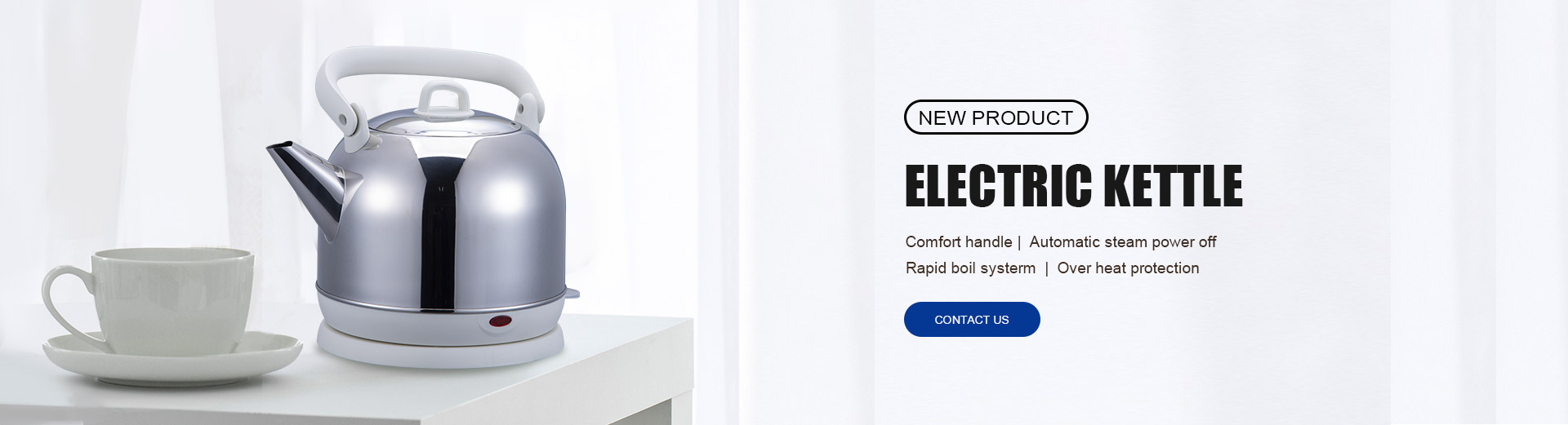
kettle production uses quality control checkpoints covering raw materials, manufacturing processes, assembly, functional testing, and final inspection to ensure reliable product performance.
Quality control checkpoints help manufacturers identify and solve potential issues throughout the production process instead of relying only on final inspection.
electric kettles combine multiple components, including metal bodies, heating systems, plastic parts, and electrical structures. A problem in any production stage may affect safety, durability, or user experience.
A complete quality control system helps ensure:
Stable product performance
Consistent appearance
Reliable safety features
Reduced production defects
Better manufacturing efficiency
For OEM and ODM kettle projects, checkpoints are especially important because customized designs may involve different materials, structures, and production requirements.
The first quality checkpoint begins before manufacturing. Material and component verification helps prevent problems from entering the production line.
Important pre-production checks include:
Manufacturers inspect materials such as:
Stainless steel sheets
Engineering plastics
Electrical components
Heating elements
Inspection focuses on:
Material specifications
Surface condition
Quality consistency
Supplier compliance
Before mass production, engineers evaluate:
Product drawings
Component compatibility
Manufacturing feasibility
Assembly requirements
This step helps identify potential production challenges before manufacturing begins.
Stainless steel is a major material used in kettle manufacturing, making material control essential.
Quality checkpoints include:
Consistent thickness helps maintain:
Structural strength
Product appearance
Manufacturing stability
Manufacturers check for:
Scratches
Surface defects
Uneven textures
After metal forming, components are checked for:
Shape accuracy
Dimensional consistency
Structural integrity
These controls help ensure stainless steel components meet production requirements.
Metal forming processes such as stamping and deep drawing directly affect kettle body quality.
Manufacturers monitor:
Mold accuracy
Forming pressure
Component dimensions
Surface condition
Key inspections include:
| Production Stage | Quality Focus |
|---|---|
| Stamping | Shape accuracy and consistency |
| Deep drawing | Body structure and deformation control |
| Component forming | Dimensional accuracy |
Proper process monitoring reduces defects and improves manufacturing stability.
Welding is an important checkpoint because it affects structural strength and water-tight performance.
Manufacturers inspect:
Checking:
Weld uniformity
Surface smoothness
Visible defects
Evaluating:
Joint reliability
Structural stability
Long-term durability
Welded areas are tested to confirm reliable water containment.
Consistent welding control helps improve kettle safety and service life.
Plastic components such as handles, lids, and bases require precise quality management.
Injection molding checkpoints include:
Manufacturers check mold performance to maintain consistent component dimensions.
Important factors include:
Injection temperature
Pressure control
Cooling time
Components are checked for:
Size accuracy
Surface appearance
Assembly compatibility
These inspections help ensure plastic parts function correctly with other kettle components.
Surface treatment affects both product appearance and perceived quality.
Common checkpoints include:
Manufacturers check brushed or matte finishes for consistency.
Mirror-polished surfaces are inspected for:
Smoothness
Reflection quality
Surface defects
Coated surfaces are evaluated for:
Color consistency
Adhesion performance
Surface durability
Good surface control helps maintain a premium appearance across production batches.
Assembly is a critical checkpoint because multiple components must work together correctly.
Manufacturers inspect:
Heating element installation
Handle attachment
Lid operation
Power base connection
Electrical component placement
Assembly checks help prevent:
Loose components
Functional problems
Safety risks
Proper assembly quality improves overall product reliability.
After assembly, electric kettles undergo functional testing to verify performance.
Common tests include:
Checking:
Heating operation
Boiling performance
Temperature control
Evaluating:
Power system safety
Insulation performance
Electrical stability
Checking:
Switch function
Automatic shut-off
User operation performance
These tests confirm that finished products operate correctly.
Final inspection is the last quality checkpoint before products leave the factory.
Manufacturers verify:
| Final Inspection Item | Purpose |
|---|---|
| Appearance | Confirms product condition |
| Function | Ensures normal operation |
| Packaging | Protects products during shipping |
| Quantity | Confirms order accuracy |
Only products that pass final inspection are prepared for shipment.
Large-scale kettle production requires continuous quality monitoring.
Manufacturers maintain consistency through:
Standard operating procedures
Production records
Worker training
Equipment maintenance
Sampling inspections
Regular monitoring helps prevent quality variation between different production batches.
Customized kettles require additional quality attention because designs and specifications may vary.
Manufacturers use checkpoints to control:
Customized materials
New structures
Special finishes
Functional requirements
A systematic quality process helps transform customized designs into reliable mass-produced products.
Quality control checkpoints ensure that every stage of kettle manufacturing meets safety, performance, and appearance requirements.
From raw material inspection to final shipment testing, each checkpoint contributes to product reliability.
Through systematic quality management, electric kettle manufacturers can deliver products with stable performance, consistent quality, and long-term value for global markets.