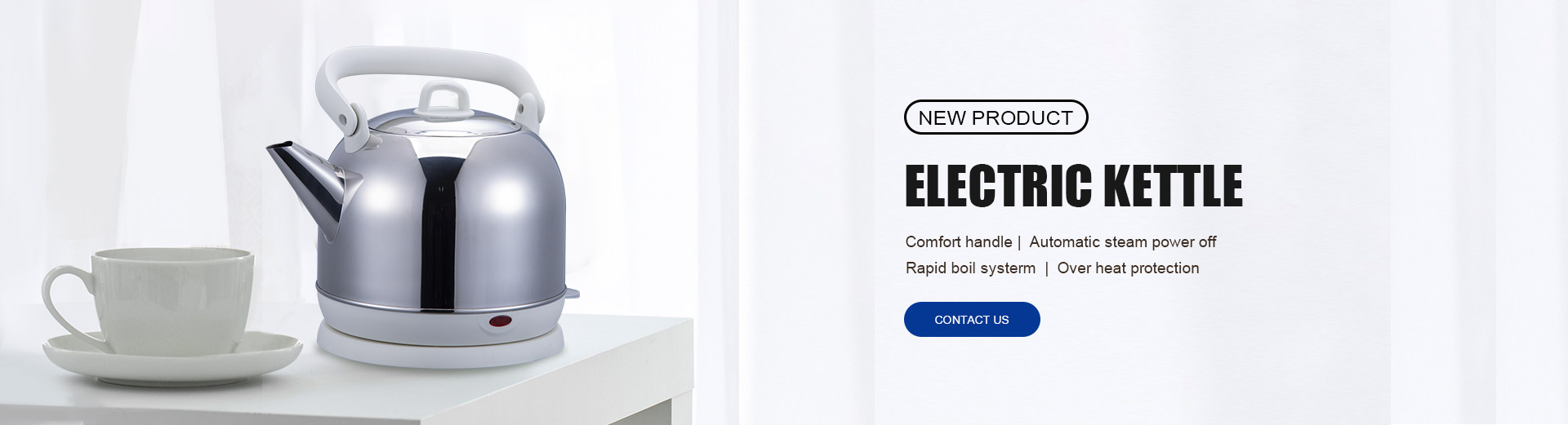
2L electric kettles are generally better for high-volume usage because they provide larger water capacity, while 1.7L kettles offer a balance between capacity, size, and everyday convenience.
Capacity directly affects how efficiently an electric kettle can support frequent water demand.
High-volume users usually care about:
Water output
Heating frequency
Operating efficiency
Product durability
Maintenance requirements
For manufacturers and brands, selecting between 1.7L and 2L capacities requires considering:
Usage environment
Customer demand
Sales channel
Product positioning
The larger capacity is not always better. The right choice depends on the application.
The main difference is the amount of water available per heating cycle.
A 1.7L kettle is one of the most common household capacities.
It provides:
Sufficient water volume for families
Balanced product size
Easy daily handling
It is suitable for:
Household kitchens
Office use
General retail markets
A 2L kettle is designed for users who require more hot water at one time.
It provides:
Higher water output
Fewer refilling cycles
Better support for group usage
It is suitable for:
Large families
Hospitality applications
High-demand environments
Family size and usage habits influence capacity selection.
A 1.7L kettle can support:
Daily tea preparation
Coffee making
Normal household boiling needs
Advantages include:
Easier handling
Moderate heating time
Practical kitchen size
A 2L kettle is suitable for:
Larger households
Frequent beverage preparation
Multiple users
Advantages include:
More water availability
Reduced repeated boiling
Higher daily efficiency
High-volume environments require stronger water supply capability.
A 1.7L kettle works well for:
Small offices
Personal workspaces
Limited user groups
It provides a good balance between:
Capacity
Size
Energy consumption
A 2L kettle is more suitable for:
Meeting rooms
Hospitality areas
Shared spaces
Benefits include:
Serving more users
Reducing waiting time
Improving operational efficiency
Water volume directly influences heating requirements.
Advantages include:
Shorter heating time compared with larger models
Lower power demand
Efficient daily operation
Larger water volume requires:
Higher heating efficiency
Stronger heating systems
Better thermal management
Manufacturers need to balance heating speed, safety, and energy efficiency.
Different capacities require different structural considerations.
Manufacturers focus on:
Comfortable handling
Compact structure
Balanced weight
Manufacturers need to consider:
Stronger handles
More durable body structures
Better weight distribution
A full 2L kettle creates more load during pouring, making ergonomic design important.
Capacity affects materials, components, and production requirements.
| Factor | 1.7L Electric Kettle | 2L Electric Kettle |
|---|---|---|
| Water Capacity | Medium | Higher |
| Material Usage | Lower | Higher |
| Product Weight | Lighter | Heavier |
| Heating Requirement | Moderate | Higher |
| Application | Household and general use | High-volume usage |
Manufacturers evaluate capacity together with target pricing and market demand.
OEM selection depends on the final application.
Suitable for:
Mainstream household products
Retail appliance brands
General consumer markets
Customization options include:
Body design
Materials
Surface finishes
Functions
Suitable for:
Commercial appliance suppliers
Hospitality products
High-capacity household markets
Customization may include:
Stronger structures
Larger heating systems
Enhanced durability features
Product size influences export and logistics planning.
Benefits include:
Smaller packaging
Better shipping efficiency
Easier storage
Requires:
Larger packaging solutions
More protection materials
More warehouse space
Manufacturers optimize packaging based on product dimensions and export requirements.
Convenience depends on the balance between capacity and handling.
Provides:
Easier lifting
Comfortable pouring
Suitable daily capacity
Provides:
More water per cycle
Less frequent refilling
Better efficiency for groups
The ideal capacity depends on the user's priorities.
Professional manufacturers evaluate:
Customer usage scenarios
Target market
Product positioning
Production requirements
They help brands choose capacities that balance:
Performance
Cost
User experience
Market demand
Both 1.7L and 2L kettles have strong applications.
1.7L kettles are suitable for mainstream household markets because they provide balanced capacity and usability.
2L kettles are suitable for high-volume usage because they support larger water demand and fewer refill cycles.
Capacity determines how well an electric kettle matches user needs.
The 1.7L electric kettle provides a practical balance between size, convenience, and performance, while the 2L electric kettle offers stronger support for high-volume applications.
By selecting the right capacity and working with an experienced electric kettle manufacturer, brands can develop products that meet market requirements and deliver better user value.