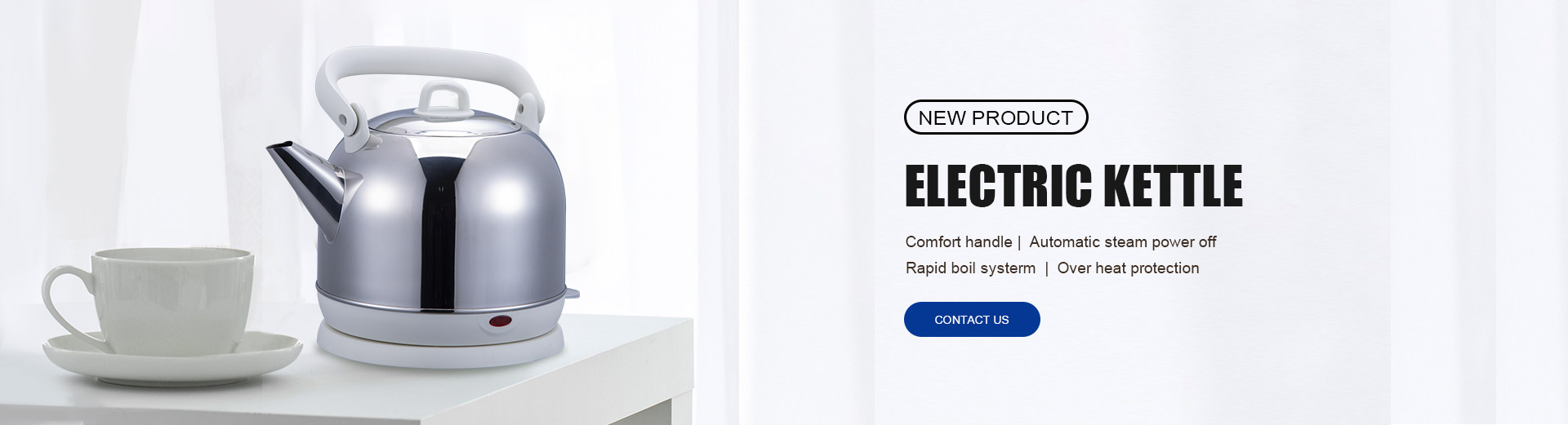
The price of custom electric kettles is affected by product design, materials, functions, order quantity, tooling requirements, production processes, certifications, and customization levels.
Custom electric kettle pricing depends on many factors because customized products involve different levels of design, manufacturing, and quality requirements.
Unlike standard models, custom kettles may require additional work in areas such as:
Product development
Material selection
Mold creation
Surface treatment
Functional testing
Packaging customization
A clear understanding of these factors helps buyers evaluate costs more accurately and choose suitable solutions based on their market positioning.
Product design is one of the first factors influencing manufacturing costs.
A simple design usually requires fewer production processes, while complex designs may involve:
More components
Additional engineering work
Special manufacturing methods
Longer development time
Design factors that influence cost include:
Complex structures may require:
More assembly steps
Additional components
Higher production requirements
Customized shapes, unique handles, special lids, or decorative structures may increase development costs.
Additional functions such as:
Temperature control
Keep-warm functions
Digital displays
Smart controls
may require additional components and testing.
Material selection directly affects both product performance and manufacturing cost.
Common material factors include:
Different stainless steel grades influence:
Raw material cost
Durability
Processing requirements
Product positioning
Higher-grade materials may provide better performance but increase material costs.
Handles, lids, and bases require suitable engineering plastics.
Cost factors include:
Material type
Heat resistance requirements
Color customization
Component complexity
Heating elements, switches, and control systems also affect the overall product cost.
The selection depends on:
Safety requirements
Performance expectations
Target market
Kettle capacity influences material usage and production requirements.
Different capacities require different:
Stainless steel amounts
Component sizes
Packaging solutions
Production processes
For example, larger capacity kettles may require stronger structures and additional material compared with compact models.
Order quantity is one of the most important cost factors in manufacturing.
Large orders often benefit from:
Lower unit production costs
Better material purchasing efficiency
Improved production utilization
Smaller orders may have higher unit costs because:
Tooling costs are distributed across fewer units
Production setup costs remain similar
Material purchasing advantages are reduced
Manufacturers usually evaluate order volume when providing customized pricing solutions.
New product designs may require customized molds, especially for unique plastic components or special structures.
Mold costs depend on:
Product complexity
Mold materials
Component design
Expected production volume
Common mold-related costs include:
Mold design
Tool manufacturing
Testing adjustments
Maintenance
For long-term projects, tooling investment may be distributed across larger production quantities.
Surface finishing influences both appearance and manufacturing complexity.
Common surface treatments include:
Brushed stainless steel
Mirror polishing
Matte finishing
Color coating
Decorative processing
Cost differences depend on:
Processing difficulty
Required equipment
Quality control standards
Appearance requirements
Premium finishes usually require more production steps and stricter inspection.
Production processes directly affect manufacturing efficiency and cost.
Important processes include:
| Manufacturing Process | Cost Influence |
|---|---|
| Metal forming | Affects material usage and production efficiency |
| Welding | Influences processing time and quality control |
| Injection molding | Determines component production cost |
| Assembly | Affects labor and production efficiency |
| Testing | Ensures safety and reliability |
Optimized manufacturing processes help control costs while maintaining product quality.
Certification requirements may influence product development costs.
Depending on the target market, products may require:
Electrical safety testing
Material compliance testing
Documentation preparation
Certification support
Different markets have different requirements, which may affect:
Testing expenses
Development time
Production preparation
Early certification planning helps avoid unexpected costs.
Packaging is another factor that influences customized kettle pricing.
Customized packaging may include:
Printed boxes
Brand labels
User manuals
Product inserts
Cost depends on:
Packaging material
Printing method
Design complexity
Order quantity
Professional packaging helps improve brand presentation but should be planned together with product requirements.
Quality control influences cost because reliable manufacturing requires inspection and testing.
Quality processes may include:
Material inspection
Production monitoring
Electrical testing
Performance testing
Final inspection
Although quality control adds manufacturing steps, it helps reduce risks such as:
Product failures
Customer complaints
Returns
Rework costs
Different manufacturers may provide different pricing because their production capabilities vary.
Factors include:
Manufacturing equipment
Production efficiency
Engineering support
Quality management
Supply chain capability
A factory with complete production capabilities may provide better control over quality and production costs.
Buyers can manage costs by planning customization requirements carefully.
Effective approaches include:
Clarify whether the product targets:
Entry-level markets
Mid-range markets
Premium markets
Avoid unnecessary complexity while maintaining key features.
Choose materials according to:
Performance requirements
Market expectations
Budget goals
Larger production volumes usually improve cost efficiency.
The price of custom electric kettles is determined by the combination of design, materials, manufacturing processes, customization requirements, and quality standards.
A professional manufacturer evaluates these factors together to provide solutions that balance cost, performance, and product value.
By understanding the key pricing factors before production begins, buyers can develop electric kettle products with better cost control, reliable quality, and stronger market competitiveness.