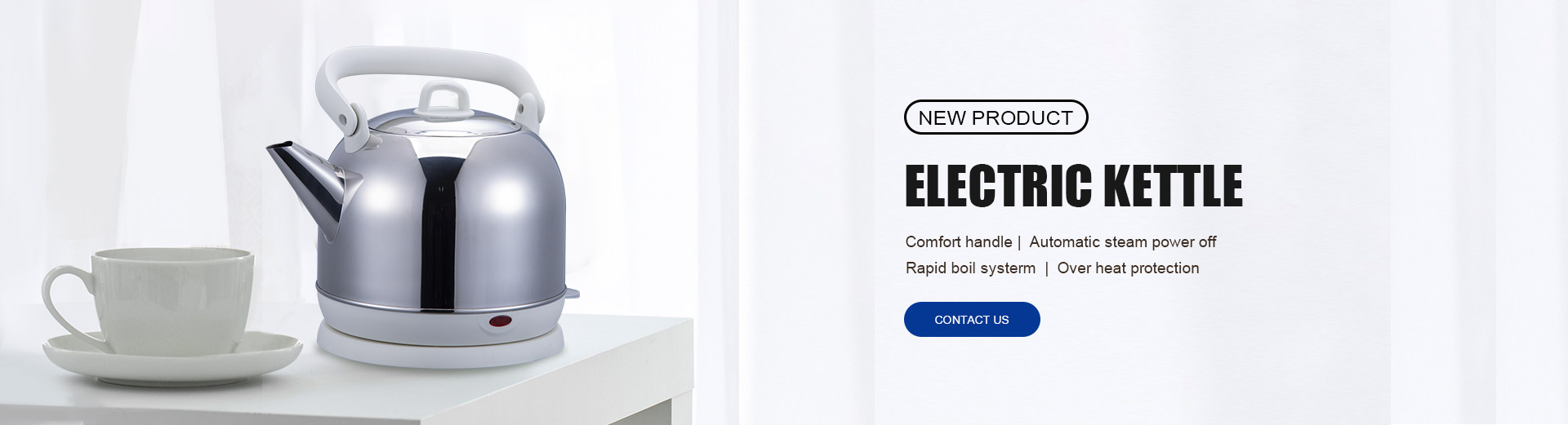
Manufacturers control costs during custom kettle production through optimized design, material management, efficient processes, production planning, and quality control.
Cost control is an important part of custom electric kettle production because customized products involve multiple factors that influence the final price.
Unlike standard products, custom kettle projects may include:
New designs
Special materials
Customized components
Unique surface finishes
Different production quantities
Effective cost management helps manufacturers provide competitive solutions while maintaining product quality and performance.
The goal of professional cost control is not simply reducing expenses, but creating a balance between:
Product quality
Manufacturing efficiency
Material selection
Production reliability
Product design is one of the first factors influencing manufacturing costs.
A complex design may require:
Additional tooling
More production steps
Special components
Longer development time
Manufacturers control costs through:
Engineers review whether the product structure can be simplified without affecting performance.
Optimization may include:
Reducing unnecessary components
Improving assembly efficiency
Selecting suitable production methods
Before production begins, manufacturers evaluate:
Material usage
Processing difficulty
Production efficiency
Early design optimization helps avoid unnecessary costs during mass production.
Materials directly affect both product quality and manufacturing costs.
Manufacturers manage material costs through:
Different stainless steel grades and thicknesses influence:
Raw material cost
Product durability
Processing requirements
The suitable material should match the product positioning and market requirements.
For handles, lids, and bases, manufacturers consider:
Material performance
Mold requirements
Production efficiency
Proper material selection helps achieve the required performance without unnecessary cost increases.
Production efficiency has a direct impact on manufacturing costs.
Manufacturers optimize:
Improving:
Forming efficiency
Welding procedures
Material utilization
Controlling:
Mold design
Cycle time
Material usage
Optimizing:
Production workflow
Worker operations
Component handling
Efficient processes reduce waste and improve production productivity.
Order quantity plays an important role in cost management.
Large-volume production can reduce average costs through:
Higher equipment utilization
Improved production efficiency
Better material purchasing conditions
Reduced setup costs per unit
However, smaller orders may require different cost strategies, such as:
Using existing molds
Selecting standard components
Optimizing product specifications
Manufacturers help customers choose suitable production approaches based on order requirements.
Customized electric kettles may require new molds for unique designs.
Mold-related costs can be controlled through:
Engineers evaluate whether molds can be simplified while maintaining product quality.
Using proven structures or adapting existing designs may reduce development costs.
Proper mold maintenance improves:
Production stability
Mold lifespan
Cost efficiency
Effective tooling management helps control initial investment.
A stable supply chain helps manufacturers manage material and component costs.
Cost control methods include:
Supplier evaluation
Bulk material planning
Long-term supplier cooperation
Inventory management
Reliable suppliers help reduce risks related to:
Material shortages
Price fluctuations
Production delays
Quality control is not only about improving product reliability. It also helps prevent unnecessary production expenses.
Poor quality can lead to:
Rework
Material waste
Production delays
Customer complaints
Manufacturers reduce these costs through:
Monitoring production stages to identify issues early.
Checking:
Electrical safety
Heating performance
Leakage prevention
Structural reliability
Strong quality control improves overall manufacturing efficiency.
Reducing costs does not mean lowering product standards.
Professional manufacturers balance cost and quality through:
Appropriate material selection
Efficient production methods
Process improvement
Quality management
For example, selecting the right stainless steel grade or optimizing product structure can reduce costs while maintaining required performance.
OEM and ODM experience helps manufacturers provide more efficient production solutions.
Experienced manufacturers understand:
Product development requirements
Manufacturing limitations
Material alternatives
Process optimization opportunities
This experience helps identify cost-saving opportunities without affecting product reliability.
Large custom orders require careful cost management because small differences can affect total production expenses.
Manufacturers control costs through:
Production scheduling
Material planning
Batch management
Process standardization
Quality monitoring
Efficient management helps maintain stable costs throughout the production cycle.
Successful cost optimization requires cooperation between buyers and manufacturers.
Important communication points include:
Product positioning
Target price range
Required functions
Material preferences
Expected order volume
Early communication allows manufacturers to recommend suitable solutions before production begins.
Cost control determines whether customized electric kettles can achieve competitive pricing while maintaining reliable quality.
Through optimized design, efficient manufacturing processes, material management, and strict quality control, manufacturers can reduce unnecessary costs and improve production efficiency.
A professional cost management system helps electric kettle manufacturers provide reliable, customized solutions for global markets.