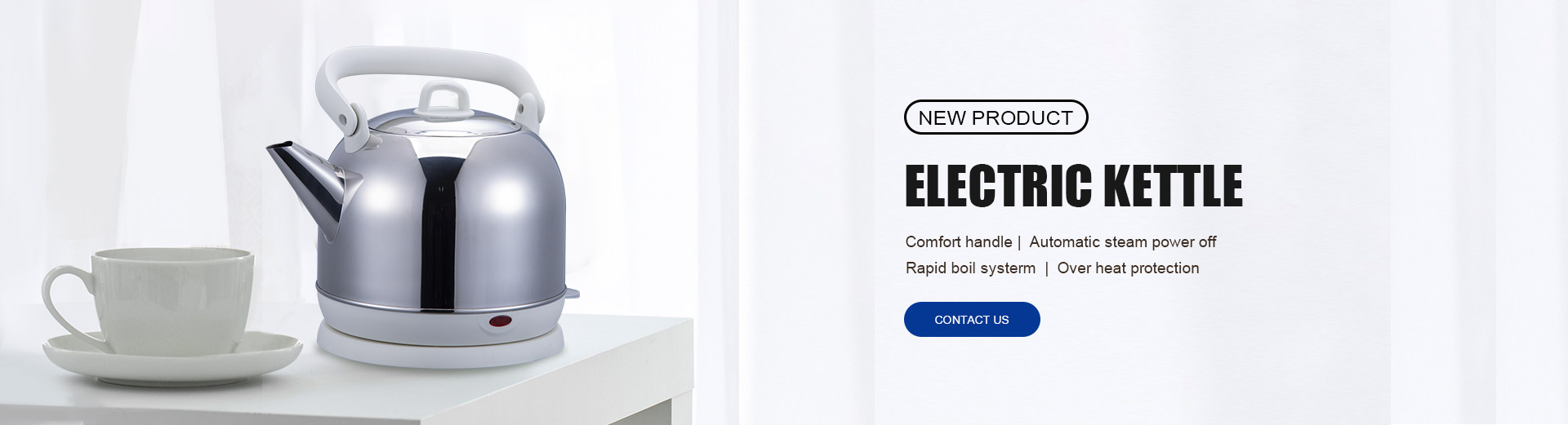
The lead time of custom electric kettle orders is affected by product design, material preparation, production processes, testing requirements, order quantity, and supply chain coordination.
Lead time directly affects product launches, inventory planning, and market response for brands developing customized electric kettles.
Unlike standard products, custom kettle orders usually require additional steps, including:
Product design confirmation
Prototype development
Material preparation
Mold or tooling development
Production scheduling
Quality testing
Each stage influences the final delivery timeline.
A professional manufacturing process helps control lead time while maintaining product quality and production reliability.
Product design is one of the earliest factors influencing delivery schedules.
A customized electric kettle may require changes in:
Product appearance
Structural design
Handle shape
Material selection
Functional features
Surface finishing
More complex designs usually require additional engineering evaluation and testing.
Before production begins, manufacturers review whether the design can be efficiently produced through existing manufacturing processes. Early design confirmation helps reduce delays caused by modifications during production.
Prototype development is an important stage for customized electric kettle projects.
Before mass production, manufacturers usually create samples to verify:
Product appearance
Structural performance
Component compatibility
User experience
Manufacturing feasibility
Prototype testing may identify issues that require design adjustments.
Although prototype evaluation adds time at the beginning, it helps prevent larger delays during mass production by reducing production risks.
Material preparation has a direct impact on production scheduling.
Common materials that influence lead time include:
Manufacturers need to prepare stainless steel materials according to:
Material grade
Thickness requirements
Surface finishing needs
Special materials or customized specifications may require additional preparation time.
Customized handles, lids, or bases may require:
New molds
Material confirmation
Color matching
Heating elements, switches, and control components also require supplier coordination to ensure availability and compatibility.
Stable material planning helps prevent production delays.
For customized electric kettles, mold development may become an important factor affecting lead time.
New molds may be required for:
Unique kettle shapes
Customized handles
Special plastic components
New structural designs
The mold process usually includes:
Mold design
Tool manufacturing
Trial production
Sample approval
Mass production preparation
Existing product platforms may shorten development time, while completely new designs usually require longer preparation.
Order quantity affects production planning and manufacturing schedules.
Large-volume orders may require:
More raw material preparation
Longer production cycles
Additional quality inspections
More assembly time
However, experienced factories can optimize production scheduling through:
Production line planning
Batch management
Inventory coordination
A clear production plan helps balance efficiency and delivery requirements.
Custom electric kettles involve multiple manufacturing processes, and each stage contributes to the total lead time.
Important processes include:
| Manufacturing Process | Lead Time Influence |
|---|---|
| Metal forming | Determines kettle body production efficiency |
| Welding | Affects assembly preparation |
| Surface treatment | Influences appearance processing time |
| Injection molding | Affects plastic component availability |
| Assembly | Determines final production progress |
| Testing | Ensures product reliability before shipment |
Efficient process management helps manufacturers complete orders within planned schedules.
Quality testing is necessary before shipment and may influence final delivery timing.
Common tests include:
Electrical safety testing
Heating performance testing
Leakage testing
Structural testing
Appearance inspection
Although testing requires additional time, it helps prevent quality issues after shipment.
A reliable manufacturer includes testing time in the production plan rather than treating it as an unexpected delay.
Products targeting international markets may require specific certifications.
Certification-related processes may include:
Product testing
Documentation preparation
Compliance verification
Different markets may have different requirements, which can influence development schedules.
Planning certification requirements early helps avoid delays before shipment.
Factory capability plays an important role in managing custom kettle lead times.
Factors include:
Production equipment
Manufacturing experience
Workforce capacity
Quality control systems
Order scheduling ability
Factories with complete production systems can better coordinate multiple manufacturing stages and maintain stable delivery performance.
Manufacturers reduce lead time through better planning and process management.
Effective methods include:
Reducing changes after production preparation begins.
Preparing key materials before production starts.
Improving workflow between manufacturing stages.
Tracking progress and solving issues quickly.
Preventing defects that cause rework and delays.
Efficient management helps shorten delivery cycles without reducing product quality.
OEM and ODM experience helps manufacturers better estimate and control project timelines.
Experienced manufacturers understand:
Common design challenges
Material preparation requirements
Production risks
Testing procedures
Export requirements
This experience allows factories to provide more accurate production schedules and reduce unexpected delays.
Custom electric kettle lead time depends on many interconnected factors, from design development and material preparation to production and testing.
A professional manufacturing system controls each stage through careful planning, process management, and quality supervision.
By managing these factors effectively, electric kettle manufacturers can deliver customized products with stable quality, predictable schedules, and reliable performance for global markets.